Steel Reinforcement
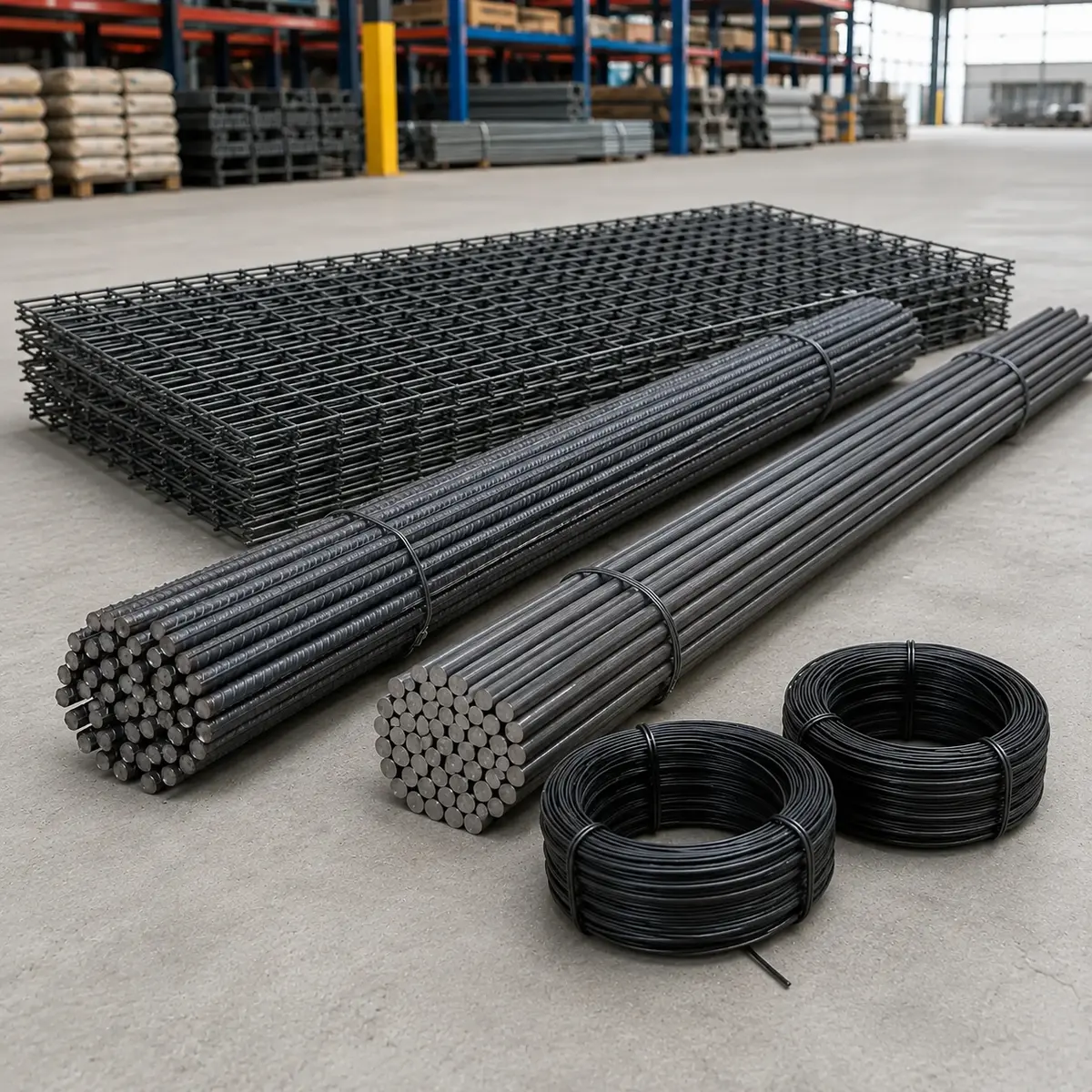
Steel reinforcement materials for concrete and general construction work in Malaysia. The range includes High-Tensile Deformed Bars, Mild-Steel Round Bars, BRC Wire Mesh and Binding Wire in selected sizes, grades, lengths, sheet formats and coil quantities. Contact Cendrex with the engineer’s bar schedule or project requirements to check current stock, certification, quantity pricing and delivery arrangements.
Description
Steel reinforcement works with concrete to carry tensile forces and control cracking within foundations, beams, columns, suspended slabs, ground slabs, retaining structures and other reinforced-concrete elements. Product type, steel grade, diameter, spacing, lap length, cover and fixing arrangement must follow the structural drawings. Reinforcement should never be selected by appearance or price alone because products that look similar may have different mechanical properties, weldability, dimensional tolerances and certification.
Cendrex’s Steel Reinforcement category brings together four commonly requested materials. High-Tensile Deformed Bars have a ribbed surface that develops a strong mechanical bond with surrounding concrete and are widely specified as primary reinforcement. Smooth Mild-Steel Round Bars may be used for links, ties, dowels or general fabrication where the project design permits. BRC Wire Mesh consists of welded longitudinal and transverse wires arranged in a regular grid, providing efficient distributed reinforcement for many slabs and pavements. Black annealed Binding Wire is used to secure bars, links and mesh in position before concrete is placed.
The correct order normally starts with a bar-bending schedule, reinforcement drawing or mesh specification. Buyers should provide the required product, nominal diameter or mesh designation, steel grade, standard length or cut length, quantity, certificate requirement and delivery location. For larger jobs, access for long vehicles, unloading equipment, safe storage and protection from mud or standing water should also be planned before dispatch.
Product Comparison
| Product | Distinguishing feature | Typical market references* | Main purpose | Confirm before ordering |
|---|---|---|---|---|
| High-Tensile Deformed Bar | Raised ribs along the bar | Diameters commonly include 10, 12, 16, 20, 25, 32 and 40 mm; standard lengths are often 12 m | Primary reinforcement in structural concrete | Diameter, grade, length, mass tolerance, bar marking and certification |
| Mild-Steel Round Bar | Smooth circular surface | Common diameters may include 6, 8, 10 and 12 mm, with other fabrication sizes available | Links, ties, dowels and fabrication where specified | Diameter, steel grade, length, intended use and bend requirements |
| BRC Wire Mesh | Factory-welded square or rectangular grid | A-series and other mesh designations; sheets are frequently supplied in large standard formats | Distributed reinforcement for slabs, pavements and walls | Mesh designation, wire diameter, spacing, sheet size, lap and certification |
| Binding Wire | Flexible black annealed wire in coils | Gauge, diameter, coil weight and packing vary by supplier | Tying bars, links and mesh before concreting | Wire diameter or gauge, coil weight, finish and required quantity |
*These are general Malaysian market references, not a promise of Cendrex’s current inventory. Structural dimensions and grades must match the engineer’s drawings and current supplier documentation.
1. High-Tensile Deformed Bar
Product Overview
High-Tensile Deformed Bar, commonly called rebar or Y-bar on Malaysian construction sites, is a ribbed steel bar developed for reinforcing concrete. The surface ribs improve the mechanical bond between the bar and hardened concrete, helping the two materials act together under load. Deformed bars are used as longitudinal reinforcement in beams and columns, main steel in foundations and slabs, and in many other structural arrangements shown on reinforcement drawings.
Bar diameter and grade are engineering requirements. A larger diameter does not automatically make a substitution acceptable because changing the number or spacing of bars affects force distribution, crack control, congestion, anchorage and lap lengths. Bars should be cut and bent to the approved schedule with suitable equipment. Heating, welding, rebending or substituting steel should only be carried out when permitted by the engineer and the applicable specification.
Typical Specifications
- Common site description: Y-bar, high-yield bar, high-tensile deformed bar or reinforcement bar
- Typical nominal diameters: 10, 12, 16, 20, 25, 32 and 40 mm, subject to manufacturer and stock
- Typical straight length: 12 m in many market supplies; cut or bent lengths may be arranged separately
- Surface: Hot-rolled ribbed profile with manufacturer and grade markings
- Grade: Project- and manufacturer-specific; confirm the yield-strength and ductility classification shown on the certificate
- Documentation: Mill certificate, product certification and other compliance records as required by the project
- Handling: Store on supports above the ground and keep free from oil, mud, loose scale and other bond-reducing contamination
Recommended Applications
Foundations, pile caps, ground beams, reinforced columns, structural beams, retaining walls, suspended slabs, ground slabs, staircases and civil-engineering concrete.
Important Buying Note
Provide the complete bar mark, diameter, grade, length, shape code and quantity from the approved bar-bending schedule. Do not replace one bar size with another or mix grades without written engineering approval.
2. Mild-Steel Round Bar
Product Overview
Mild-Steel Round Bar is a smooth solid steel bar available in a range of diameters. In reinforced-concrete work, plain round bars may be specified for links, stirrups, ties, dowels or other details where their properties are suitable. Round bar is also used extensively for brackets, frames, pins, grilles and general fabrication, so the intended structural or non-structural use should be made clear when requesting a quotation.
Unlike deformed bar, smooth round bar does not have ribs to increase bond with concrete. Anchorage therefore depends on the engineered detail, including hooks, bends, embedment and lap arrangement. The term “mild steel” is a broad market description and should not replace a defined grade or standard on structural work. Buyers should confirm the required mechanical properties, weldability and bending performance before ordering.
Typical Specifications
- Common site description: R-bar, plain round bar, smooth bar or mild-steel round bar
- Typical reinforcement diameters: 6, 8, 10 and 12 mm, subject to project and supplier
- Other fabrication sizes: Available ranges vary and should be checked against stock
- Typical straight length: Often 6 or 12 m depending on diameter, manufacturer and market supply
- Surface: Smooth, uncoated steel unless another finish is specified
- Grade: Must be confirmed from the project requirement and current supplier certificate
- Processing: Cutting, bending and welding requirements should be stated before fabrication
Recommended Applications
Stirrups, links, ties, dowels, spacers, small reinforcement details, brackets, frames, gates, grilles and general steel fabrication where specified.
Important Buying Note
State whether the bar is for reinforced concrete or general fabrication. A fabrication-grade round bar should not be assumed suitable for structural reinforcement without the required grade and certification.
3. BRC Wire Mesh
Product Overview
BRC Wire Mesh is a prefabricated reinforcement sheet made by resistance-welding steel wires at regular intersections. The factory-controlled grid helps installers maintain consistent wire spacing over a wide area and can reduce the time required to place individual loose bars. BRC mesh is widely used as distributed reinforcement in floor slabs, driveways, pavements, walls and selected precast products.
Mesh designation carries important technical information and should be copied exactly from the structural drawing. Two sheets may have similar overall dimensions while using different wire diameters or spacing and therefore providing a different steel area. Sheet laps, support chairs, cover and the location of the mesh within the concrete depth all affect performance. Laying mesh directly on the ground and pulling it upward during concreting does not provide reliable cover or positioning.
Typical Specifications
- Common descriptions: BRC mesh, welded reinforcement mesh or steel fabric reinforcement
- Typical designations: A-series and other manufacturer-specific or standards-based references; A6, A7, A8, A9 and A10 are familiar market names, subject to availability
- Grid: Square or rectangular welded wire arrangement depending on designation
- Sheet format: Large flat sheets are common; exact width, length and overhang vary by supplier
- Wire properties: Diameter, strength grade, ductility and surface type must match the stated mesh designation
- Installation items: Chairs, spacers, tie wire, lap requirements and concrete cover should follow the drawings
- Documentation: Request the relevant product certificate or test documentation when required
Recommended Applications
Industrial and residential floor slabs, driveways, car parks, pavements, concrete walls, drains, precast elements and other reinforced-concrete work designed for mesh reinforcement.
Important Buying Note
Order by the full mesh designation, sheet size and quantity rather than using only a general name such as “BRC.” Confirm whether the quantity is stated in sheets, bundles, square metres or tonnes.
4. Binding Wire
Product Overview
Binding Wire is a flexible, usually black-annealed steel wire used to tie reinforcement intersections and hold bars, links and BRC mesh in the designed position while workers place concrete. Annealing makes the wire easier to twist without snapping during normal tying. It is an installation accessory rather than a substitute for structural reinforcement, welding or mechanical connections.
The quantity required depends on bar spacing, cage complexity, tie pattern, wire diameter and site practice. Ties should be secure enough to resist displacement during walking, pumping and concrete placement, while sharp wire ends should be turned inward to reduce injury and avoid interfering with concrete cover. Coils should be kept dry and organized so the wire remains manageable and does not create a trip hazard.
Typical Specifications
- Material: Low-carbon steel wire, commonly black annealed for flexibility
- Supply form: Coils or bundled smaller coils, depending on supplier
- Diameter or gauge: Supplier-specific; confirm the actual wire diameter rather than relying only on a gauge name
- Coil weight: Varies by packing method and brand
- Finish: Black annealed is common; galvanized or other wire types should be requested separately
- Use: Manual or tool-assisted reinforcement tying
Recommended Applications
Tying deformed bars, fixing stirrups and links, securing BRC mesh laps, assembling reinforcement cages and temporary site bundling.
Important Buying Note
Confirm coil weight and wire diameter when comparing quotations. A low coil price may not represent the same quantity or wire specification.
Quick Selection Guide
| Customer requirement | Recommended starting point |
|---|---|
| Main reinforcement for beams, columns, foundations or slabs | High-Tensile Deformed Bar to the engineer’s schedule |
| Smooth links, dowels or fabrication component | Mild-Steel Round Bar of the specified grade and diameter |
| Fast, regular distributed reinforcement across a slab or pavement | BRC Wire Mesh with the exact drawing designation |
| Secure bars and mesh before concrete placement | Black annealed Binding Wire |
Information to Send with a Quotation Request
For an accurate steel reinforcement quotation, provide:
- Product name: deformed bar, round bar, BRC mesh or binding wire
- Diameter, mesh designation or wire gauge
- Required steel grade and compliance standard
- Straight length, cutting length or bar-bending schedule
- Number of lengths, sheets, coils or total tonnage
- Required mill certificate or product certification
- Project name and delivery address
- Site access, unloading method and preferred delivery date